Why New Zealand Is Becoming a Quiet Force in AI Infrastructure

Start with a question that nobody in the data centre industry wants to answer honestly: where should you build AI infrastructure if you were starting from scratch today — no legacy facilities, no sunk costs, no political obligations? Forget where the cables already are. Forget where the talent clusters formed in 2015. Just first principles. Power. Stability. Jurisdiction. Climate.
The answer, uncomfortably for the incumbents, keeps pointing south.
The Problem Everyone Is Ignoring
Here's the uncomfortable truth about global AI infrastructure in 2026: it's being built in the wrong places. Northern Virginia — which hosts roughly 70% of the world's internet traffic through its data centre corridor — is running out of power. Dominion Energy, the region's utility, has publicly stated it cannot meet projected demand. New facilities are being delayed by years because the grid literally cannot support them. In Singapore, the government imposed a moratorium on new data centres in 2019 that only partially lifted in 2022, and the tropical climate means cooling costs eat 30-40% of total energy consumption.
These aren't minor logistical issues. They're structural constraints baked into the geography. And yet, billions of dollars continue to pour into the same locations because of inertia — because the cables are already there, because the talent is already there, because that's where everyone else built.
First principles thinking demands we ask: what if the cables and the talent followed the power, instead of the other way around?
82% Renewable. Today. Not 2035.
New Zealand's electricity grid is 82% renewable. Hydro. Geothermal. Wind. That number isn't a pledge, a roadmap, or a press release. It's a measured reality. The country has been running on majority-renewable power for decades — long before it became fashionable.
Why does this matter for AI? Because the economics of GPU compute are dominated by two costs: hardware depreciation and electricity. You can't do much about the first — NVIDIA sets the price, and everyone pays it. But electricity is a variable, and it's the one that determines whether your facility makes money or bleeds it.
The International Energy Agency estimates that global data centre electricity consumption will reach 945 TWh by 2028 — roughly equivalent to Japan's entire national consumption. Every facility built today on a fossil-dependent grid is inheriting a cost structure that will only worsen as carbon pricing expands. New Zealand's grid doesn't just solve the sustainability story. It solves the margin story.
The Stability Nobody Prices In
Data centre operators obsess over hardware redundancy. Dual power feeds. N+1 cooling. Generator failover with 48-hour fuel reserves. They'll spend millions engineering against a transformer failure. But almost nobody prices in political risk — the possibility that the jurisdiction itself becomes unstable, that regulations change overnight, that a government seizes assets or imposes capital controls.
New Zealand has been a continuous democracy since 1853. It ranks second globally in the Corruption Perceptions Index. Its legal system is based on English common law, with an independent judiciary and transparent regulatory framework. There are no territorial disputes, no sanctions risks, no contested elections. For a 20-year infrastructure investment, these aren't nice-to-haves. They're the foundation everything else sits on.
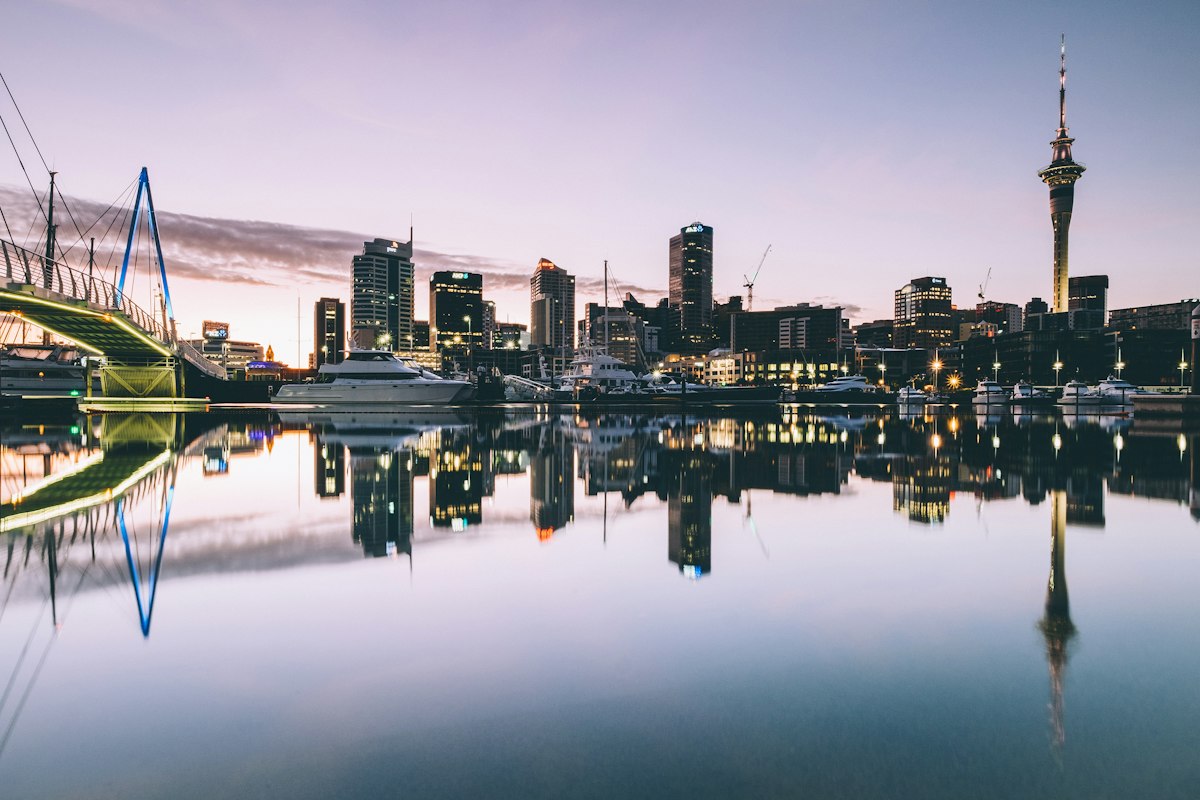
The Resolution: Building at the Edge of the World
Every competitive advantage New Zealand has for AI infrastructure was, until recently, considered a disadvantage. Remote? That means physically separated from geopolitical conflict zones. Small market? That means no domestic incumbents blocking new entrants. Far from major population centres? That means AI training workloads — which are latency-tolerant — can run without competing for capacity against consumer cloud services.
At Aerolink, we saw this inversion before it became obvious. We've been building GPU server infrastructure in New Zealand — purpose-designed for high-density AI workloads, powered by the renewable grid, governed by one of the world's most stable legal frameworks. Not retrofitting old colocation space. Building from scratch, because first principles demanded it.
The hyperscalers will eventually arrive. They always do. But infrastructure isn't a market where fast followers win. The relationships, the grid connections, the operational knowledge — these compound over years, not quarters. By the time the giants break ground, we'll have been running production workloads for years. And in this industry, time-in-market is the only moat that matters.